
 Fork on Github
Workflow
UI Storia is built for a team where integrators and developers share the same templates: your design system lives in your Symfony project, built by your integrators.
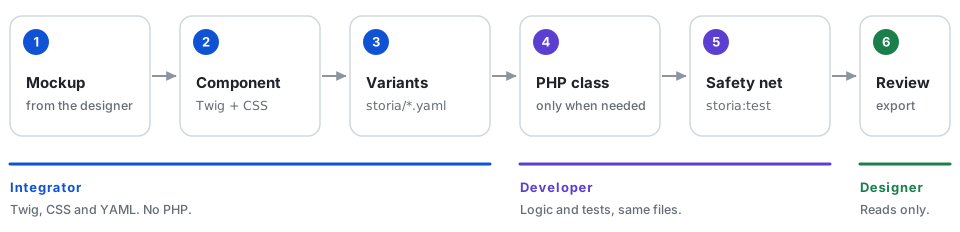
Integrator first, then developer
- From the mockup to a component. The integrator creates an anonymous component in
templates/components, with Twig and CSS only. No PHP, no controller, no database. - Variants. They describe each state of the mockup (default, large, disabled, empty, long text...) as a variant in
storia/components. The catalog now documents the component and can be reviewed by the designer. - Real data. When the component needs structured data, they write it once in
storia/data, with!data,!repeatand!lorem. - Behavior in PHP, only when needed. When the component needs logic, the developer replaces the anonymous template with a Twig Component class of the same name. The template and the variants do not change: they are the specification.
- A safety net.
storia:testrenders every variant and compares it with its snapshot. Run it in CI: a change of a component that alters another one shows up in the diff of the snapshots.
Why it works
- The integrator never leaves Twig and YAML, but works with the real templates of the application, so what they validate is what ships.
- The developer gets a catalog of every state of every component, without writing stories.
- The snapshots are plain HTML files in
tests/storia/snapshots, reviewed in the same pull request as the change.
In practice
| Who | Writes | Checks |
|---|---|---|
| Integrator | templates/components/*.html.twig, storia/**/*.yaml |
The preview, with storia:watch |
| Developer | Component classes, data providers, PHPUnit tests | storia:test locally and in CI |
| Designer | Nothing | The static export published on each merge request |